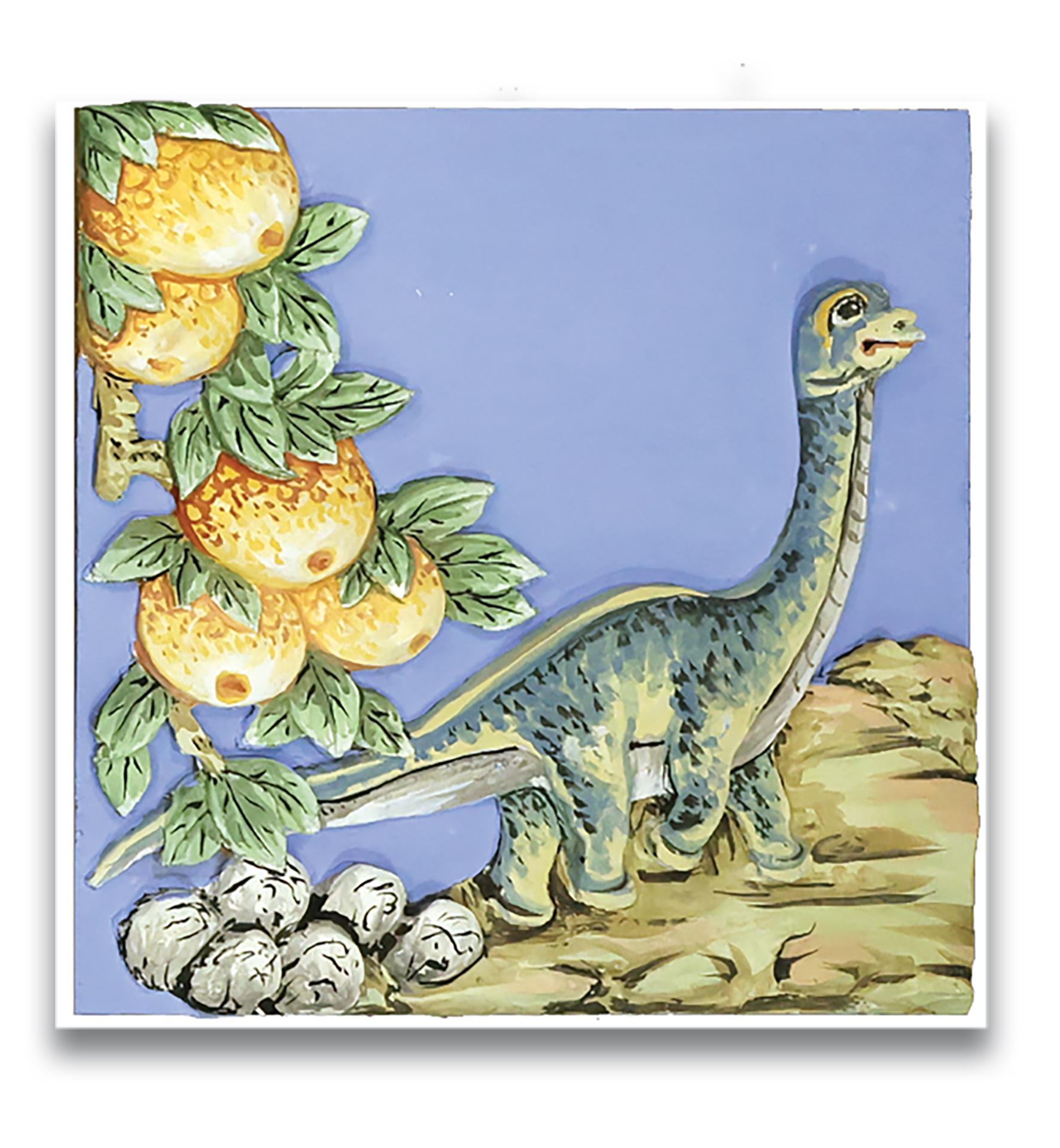
Plaster moulding is one of the significant decorations in traditional architecture in Lingnan. It has both pragmatic and decorative functions.
As a decorative architectural feature, it is made of a processed and fermented mixture of lime, straw, yukou paper, glutinous rice flour, sugar and other materials which is applied on a framework built by bamboo nails, iron nails, copper wire and tiles. The moulding is carved to shape using trowels and other tools, followed by polychrome painting.
Plaster moulding plays no part in structural strengthening. It was originally used for embellishing building joints and protecting the building against infiltration of dust and rainwater. The popularity of plaster moulding in Lingnan traditional architecture is due to local climate. The Lingnan region is proned to typhoon. To minimise the damages to building roofs by typhoons, buildings were usually roofed by thick and heavy barrel tiles. In some circumstances, green bricks were also used to build the ridge so as to increase the weight of the roof. To make the hefty, simple and flat roofs look light and vivid, colourful plaster mouldings were used. Besides, the themes of plaster moulding can convey the building owner’s aspiration for a fulfilling life and showcase the superb craftsmanship of the master artisans, thus making the façade the most eye-catching section of the building.
Apart from roof ridges, plaster mouldings were also used to decorate those parts of a building which are exposed to the sun and rain, such as gable walls, gable wall heads, screen walls, window frames, door plaques, etc., to keep out the wind and rain. As an iconic adornment of traditional buildings in Lingnan, plaster moulding is a prevalent design element primarily crafted with three-dimensional carving and relief carving with polychrome painting, and commonly used on ancestral halls, temples, monasteries and mansions.
The exhibits displayed are the works of Master Shao Chengcun, a National Level Intangible Cultural Heritage bearer of the Plaster Moulding technique. In 1979, Master Shao began his apprenticeship with his father, inheriting Shao Yaobo’s plaster moulding techniques. Over the past 40 years, his plaster moulding works can be found throughout the Pearl River Delta region, and as far afield as Hong Kong, Macao and Korea. He played a part in repairing and conserving the plaster moulding in many national- and provincial-level historic buildings, including restoration work at the Chen Clan Ancestral Hall in Guangzhou, the Foshan Ancestral Temple, the Nanhai God Temple, the Zizheng Dafu Temple in Huadu, and the Temple of the Six Banyan Trees in Guangzhou. In 2012, Master Shao Chengcun was named a National Level Intangible Cultural Heritage bearer of the Plaster Moulding technique. In 2016, he was acknowledged as one of the first Master Craftsmen of Traditional Architecture in Guangdong province, and he was among the first artisans to be honoured as a Guangzhou Folk Art Master.
| Date: | 1/11/2025 – 3/11/2025 & 24/11/2025 – 28/11/2025 |
|---|---|
| Venue: | The Central Market 93 Queen’s Road Central and 80 Des Voeux Road Central, Central, Hong Kong 1/F (near escalator connecting to Des Voeux Road Central) |
| Opening Hours: |
10 a.m. - 10 p.m. |
Free Admission
Videos on Plaster Moulding