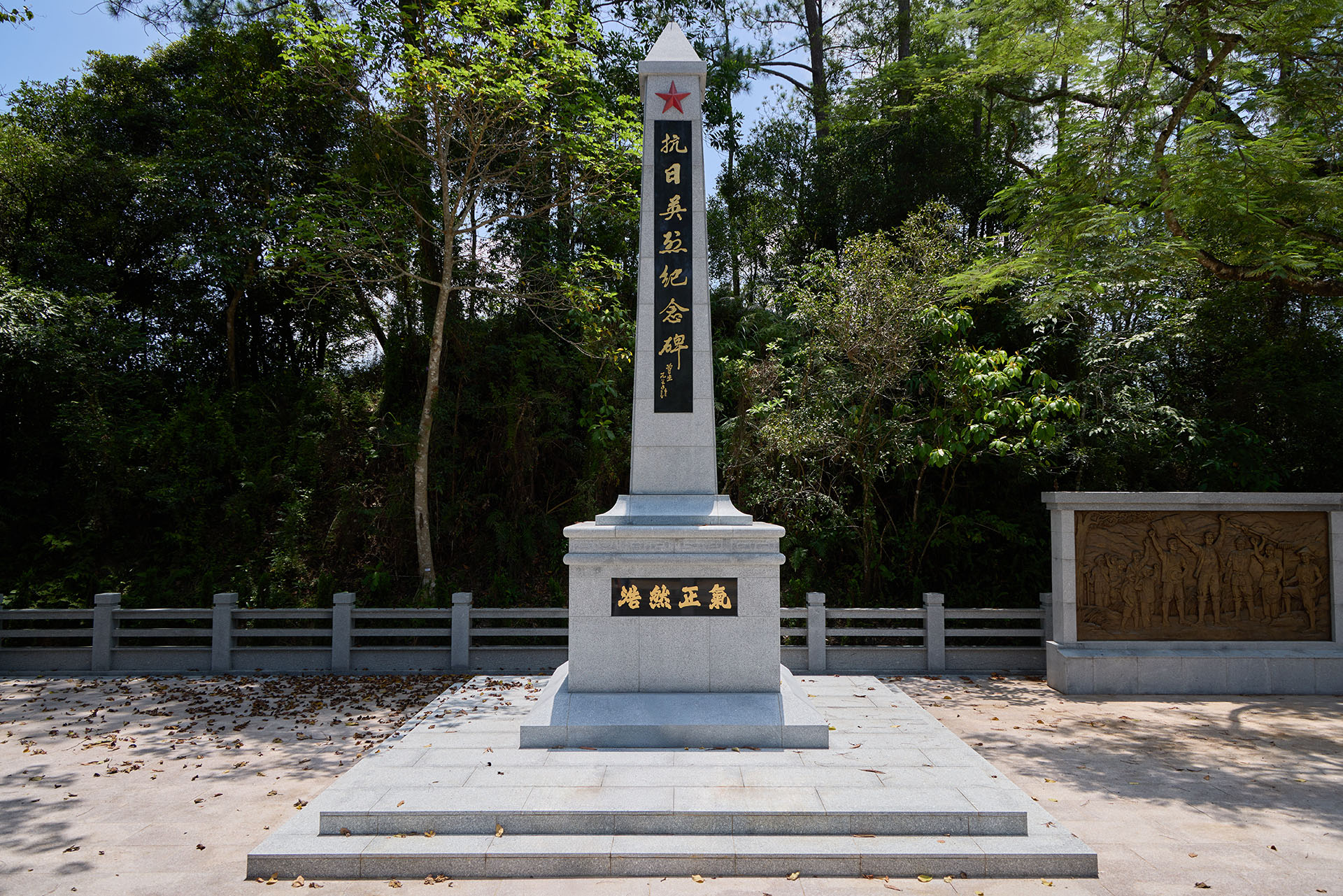
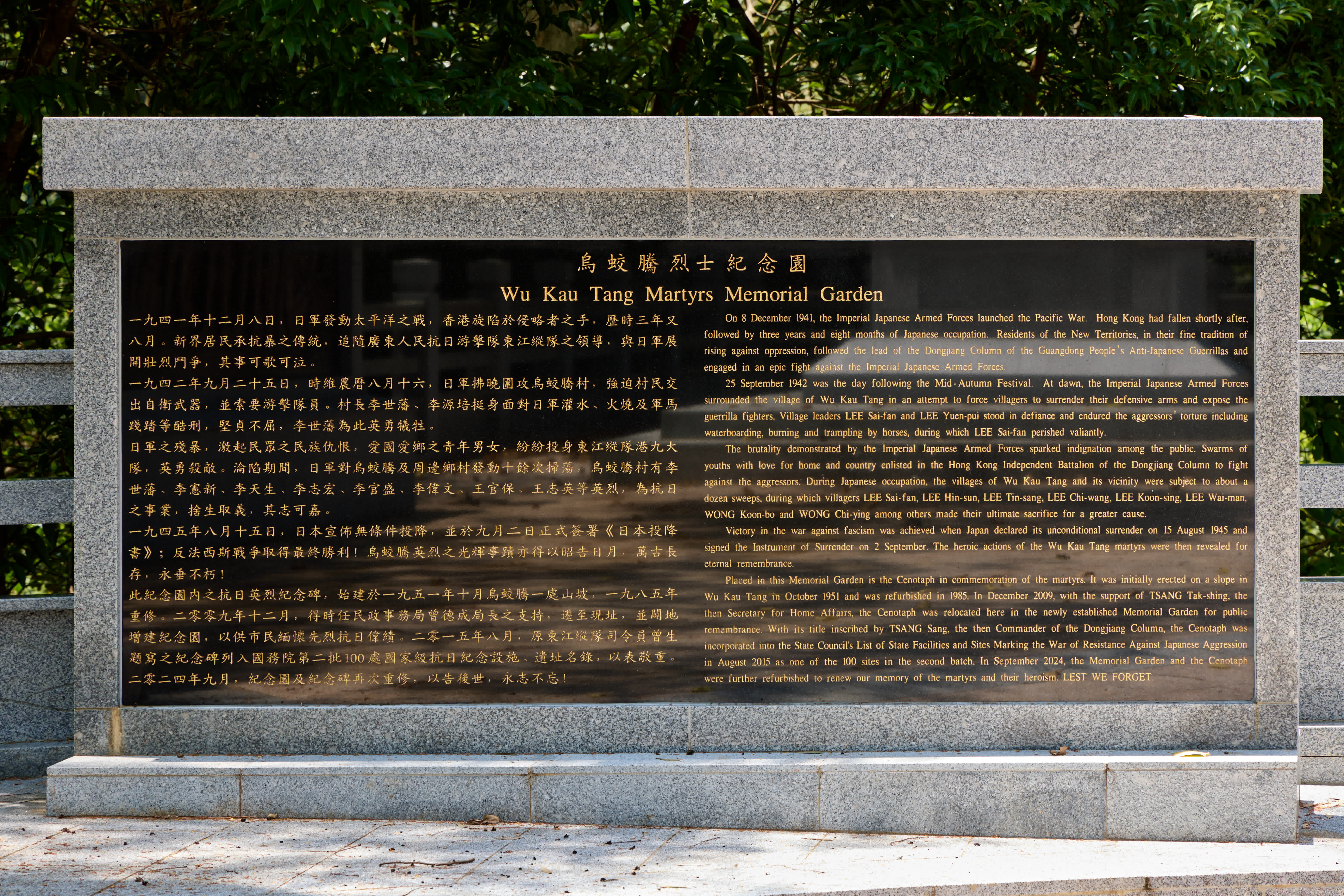
The Cenotaph for Martyrs in Wu Kau Tang stands in the Wu Kau Tang Martyrs Memorial Garden at Bride’s Pool Road, North District. During the Japanese Occupation (1941-1945), Wu Kau Tang village, a village situated in northeastern New Territories, was one of the bases of the Hong Kong-Kowloon Brigade of the Dongjiang Column. The Japanese troops launched more than ten raids in Wu Kau Tang and nearby villages. On 25 September 1942 (the sixteenth day of the eighth lunar month that year), the Japanese troops besieged Wu Kau Tang village to force local villagers to surrender their self-defence weapons and disclose the identities of guerrilla fighters. Li Shifan, the then village head of Wu Kau Tang village, sacrificed his life as a result, and another village head, Li Yuanpei, suffered severe torture at the hands of the Japanese troops. Other villagers died in the resistance against the Japanese Aggression include Li Xianxin, Li Tiansheng, Li Zhihong, Li Gongcheng, Li Weiwen, Wang Gongbao and Wang Zhiying.
In remembrance of the members of the Hong Kong-Kowloon Brigade of the Dongjiang Column as well as fellow villagers who sacrificed their lives in defending the homeland against Japanese Aggression, the villagers of Wu Kau Tang village built a cenotaph at a foothill in October 1951 using their own funds. On the sixteenth day of the eighth lunar month every year, a wreath-laying ceremony is held at the cenotaph to honour those heroic fighters.
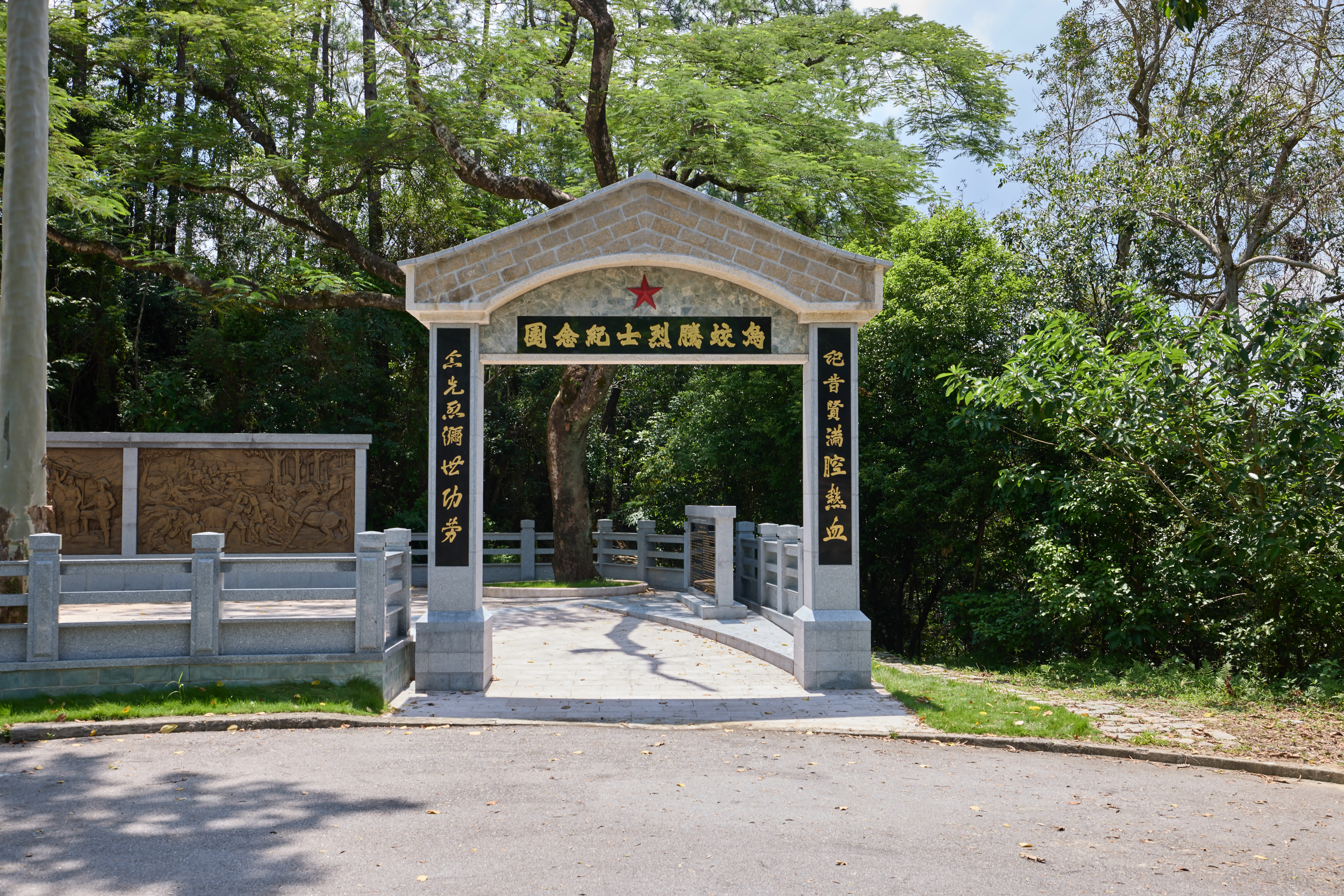
In 1984, Zeng Sheng, former commander of the Dongjiang Column, named the cenotaph “Kang Ri Ying Lie Ji Nian Bei” (Cenotaph for Martyrs of the War of Resistance against Japanese Aggression) with the calligraphy written by himself. The cenotaph was renovated using donations from the Wu Kau Tang overseas association and local villagers in 1985 and erected inside the memorial garden with its base engraved with four Chinese characters, “Hao Ran Zheng Qi” (noble righteousness), to express the profound respect for those martyrs who sacrificed themselves in the War of Resistance against Japanese Aggression. At the entrance of the current memorial garden, an archway with a set of couplets engraved with the inscriptions, “Ji Xi Xian Man Qiang Re Xue” (remembering the sacrifices of the noble souls) and “Nian Xian Lie Mi Shi Gong Lao” (honouring the martyrs who made unparalleled contributions) on both sides was built. In 1987, the family of Li Shifan was awarded a Certificate of Revolutionary Martyrdom issued in his honour by the Ministry of Civil Affairs of the People’s Republic of China.
The cenotaph was relocated to its current site using government funds in 2009. Its inauguration ceremony was held on 23 September 2010. Witnessing the important role played by the local villagers and the Hong Kong-Kowloon Brigade of the Dongjiang Column in the history of the War of Resistance against Japanese Aggression, the Cenotaph for Martyrs in Wu Kau Tang was inducted into the second “List of State Facilities and Sites Marking the War of Resistance Against Japanese Aggression” by the State Council of the People’s Republic of China on 13 August 2015.
Opening Hours:
Open all year round
Address:
Near intersection of Bride’s Pool Road and Wu Kau Tang Road, New Territories