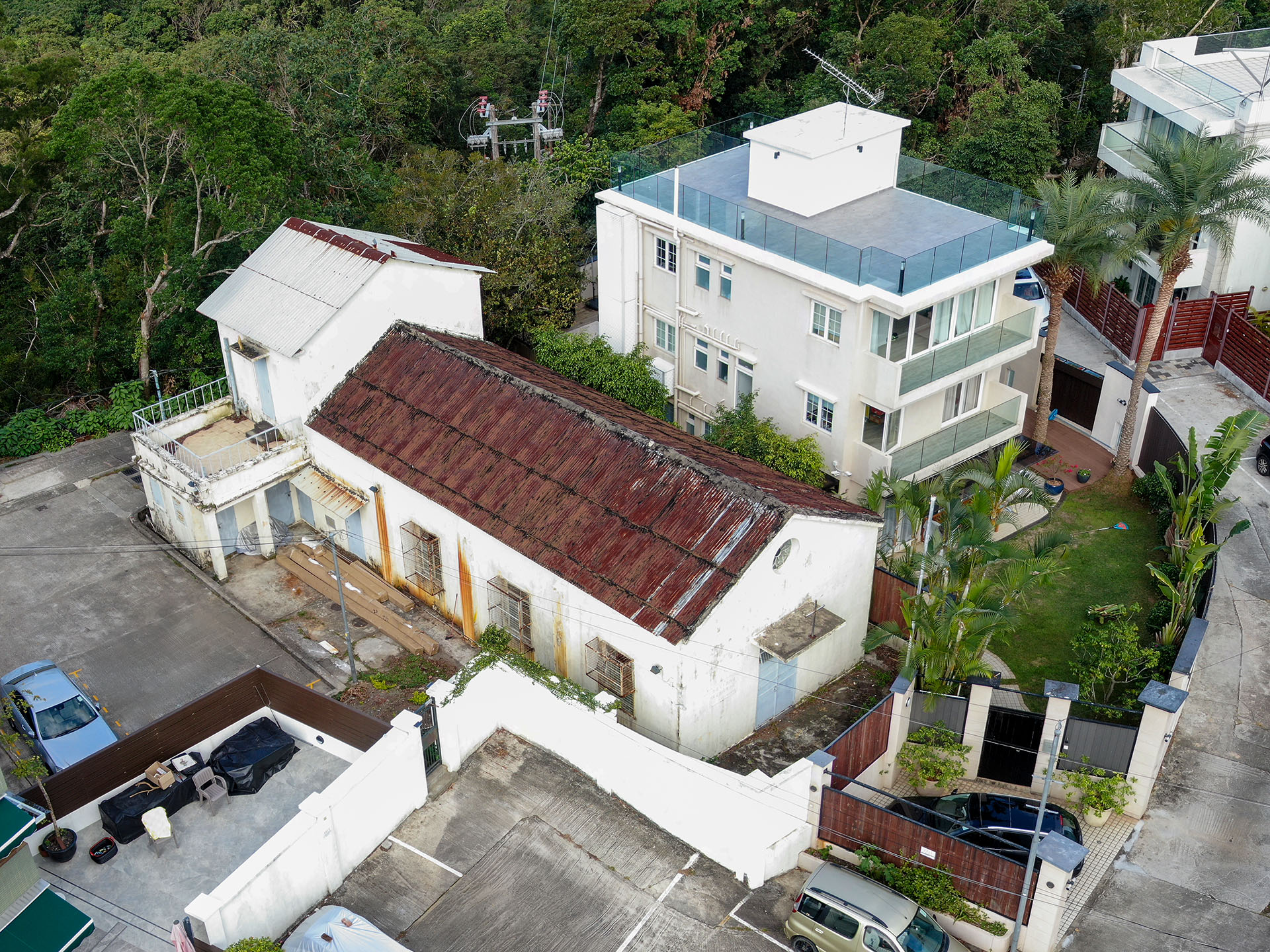
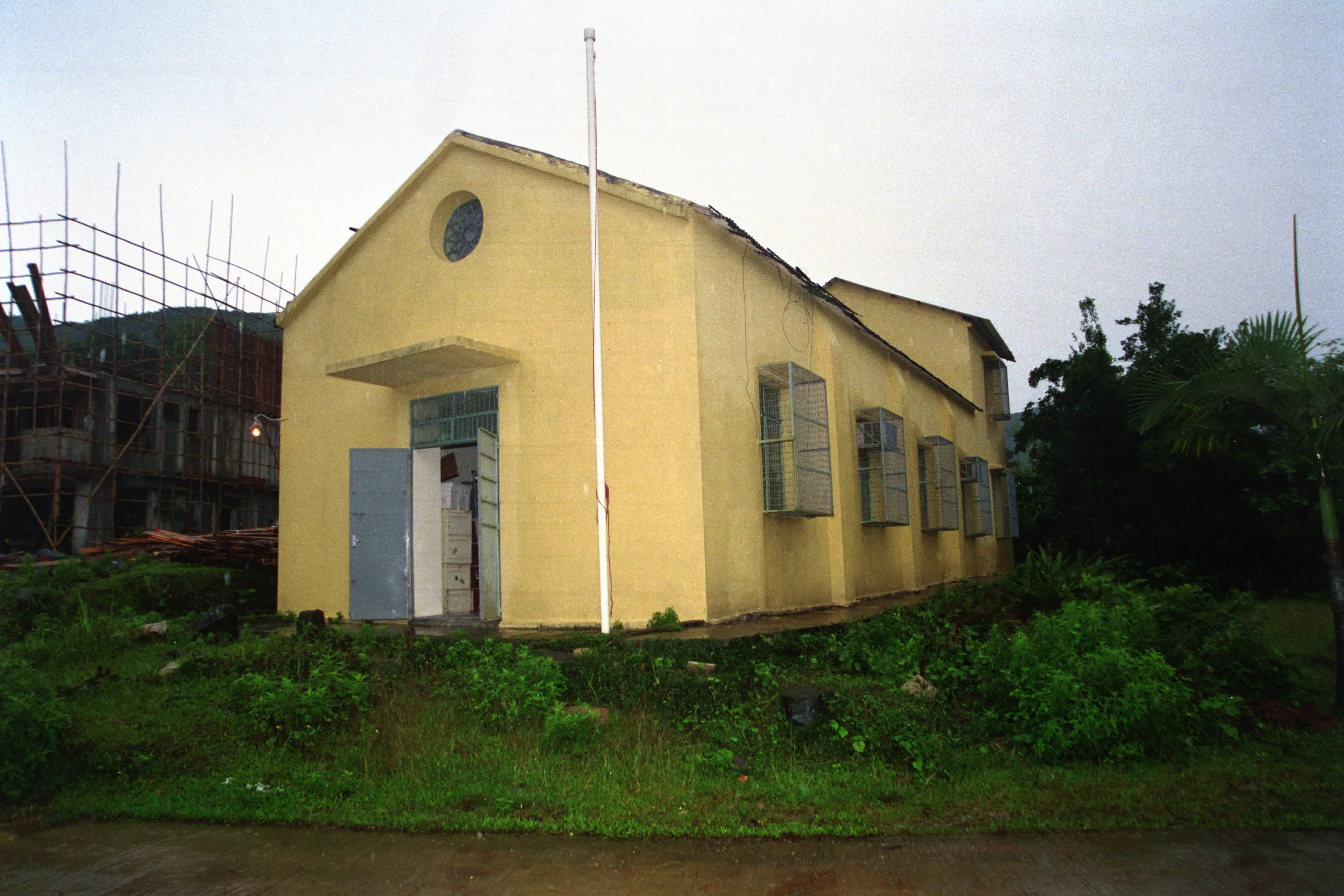
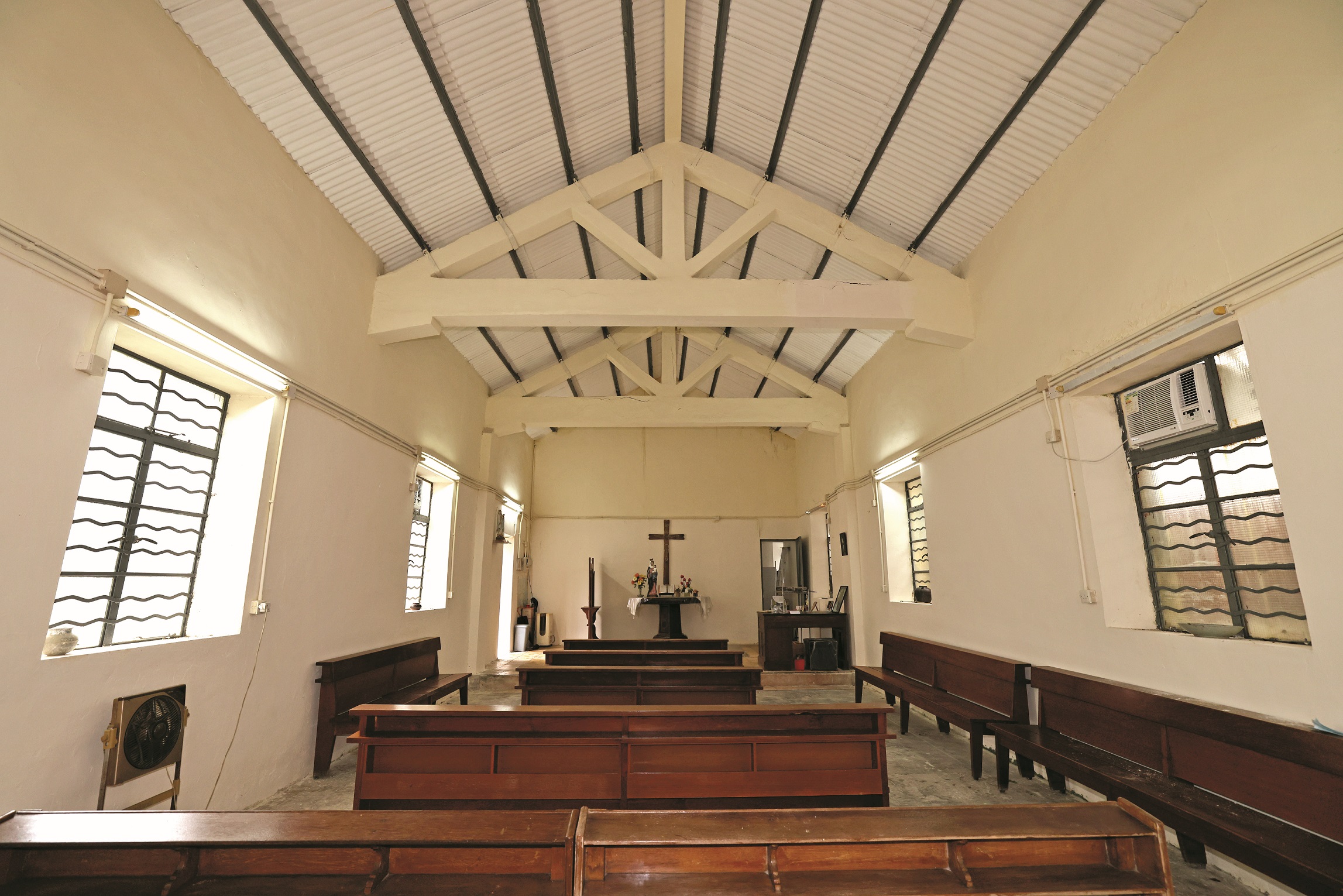
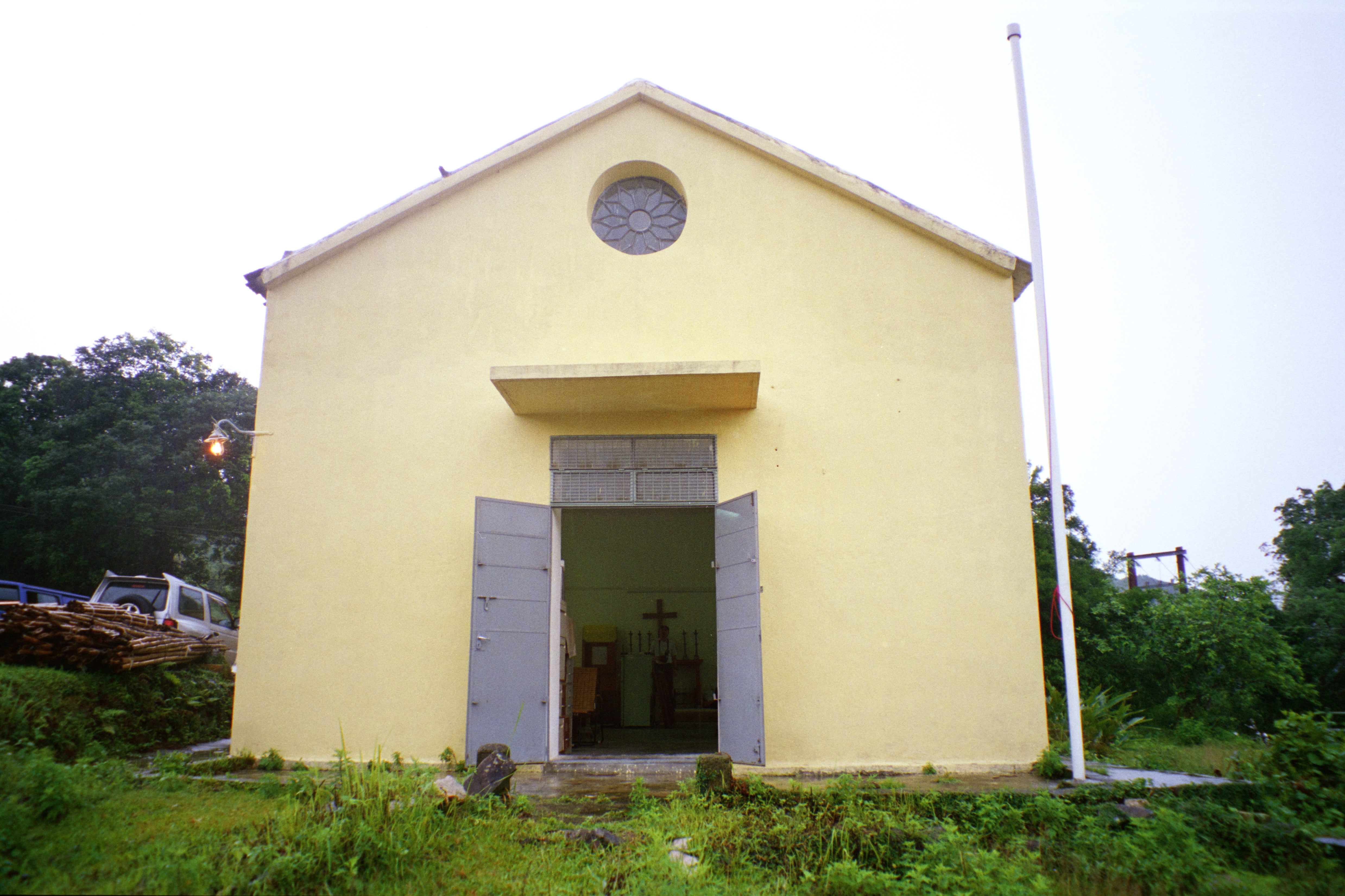
The Rosary Mission Centre in Wong Mo Ying Tsuen, Sai Kung, was one of the Catholic churches in the Sai Kung area in the early years. The first generation of Rosary Mission Centre was consecrated and opened in 1923. The existing church was rebuilt on the original site and completed in 1939. As a result of the occupation of Sai Kung by Japanese troops after the fall of Hong Kong in late 1941, the Rosary Mission Centre was left vacant. On 3 February 1942, the Hong Kong-Kowloon Brigade (the name was later changed in Chinese) of the Guangdong People’s Anti-Japanese Guerrilla Force announced its establishment at the Rosary Mission Centre. It became the major local force of resistance against the Japanese Aggression, making Hong Kong an important pivot for the War of Resistance against Japanese Aggression.
As Wong Mo Ying Tsuen is strategically located, its Rosary Mission Centre was used by the Hong Kong-Kowloon Brigade as a command centre for the guerrilla force as well as one of its main stationing bases. Two years after the establishment of the command centre for guerrilla force, about seventy guerrilla force members were stationed at the church at different times. The patriotic spirit and dedication of the guerrillas to resist the Japanese Aggression had become deeply ingrained in the hearts of the villagers there, inspiring young ones to join the guerrillas to resist the invaders. Wong Mo Ying Tsuen at that time had fourteen young people, six of whom joined the guerrilla force. There were also other mass groups including the militia, the youth association and the women’s association in the village to assist in the operation of the guerrilla force. As Wong Mo Ying Tsuen was also a liaison checkpoint, guerrilla force members en route to Kowloon would stop over or stay here, and supplies from Kowloon and elsewhere were either stored here or further transported to other places.
During the War of Resistance against Japanese Aggression, the Hong Kong-Kowloon Brigade proactively organised and set up the propaganda teams and assigned team members to villages to mobilise local villagers to resist against the Japanese Aggression. The propaganda team members also helped villagers sort out livelihood problems and implemented “The Three Together”, i.e., eat together, live together and work together so as to foster closer ties with people across the territory of Hong Kong. A member of the propaganda team of Wong Mo Ying Tsuen was a local villager named Deng De’an. Through the efforts of the propaganda team, a powerful intelligence network was established, enabling the guerrilla force to acquire civilian intelligence and peripheral support to supplement their military strength.
In autumn 1944, with the intelligence on the guerrilla activities in Wong Mo Ying Tsuen provided by hanjian (traitors), the Japanese troops launched a large-scale raid on the village to search for guerrilla force members. Villagers such as Deng Fu, Deng De’an and Deng Wukui were subjected to brutal interrogation and torture inside the Rosary Mission Centre. Deng De’an, a propaganda team member, chose death over betrayal, steadfastly refusing to reveal information about the guerrilla force, and he finally died of his severe injuries. As the Japanese troops failed to obtain any information, they looted Wong Mo Ying Tsuen in retaliation. The unwavering determination of the villagers in shielding the guerrilla force vividly indicated the support and protection given by the local people in Sai Kung to the Hong Kong-Kowloon Brigade, as well as their courage and resolve in defending their homeland. Their spirit is always revered and venerated.
Opening Hours:
Not open to the public
Address:
No. 1, Wong Mo Ying, Sai Kung, New Territories