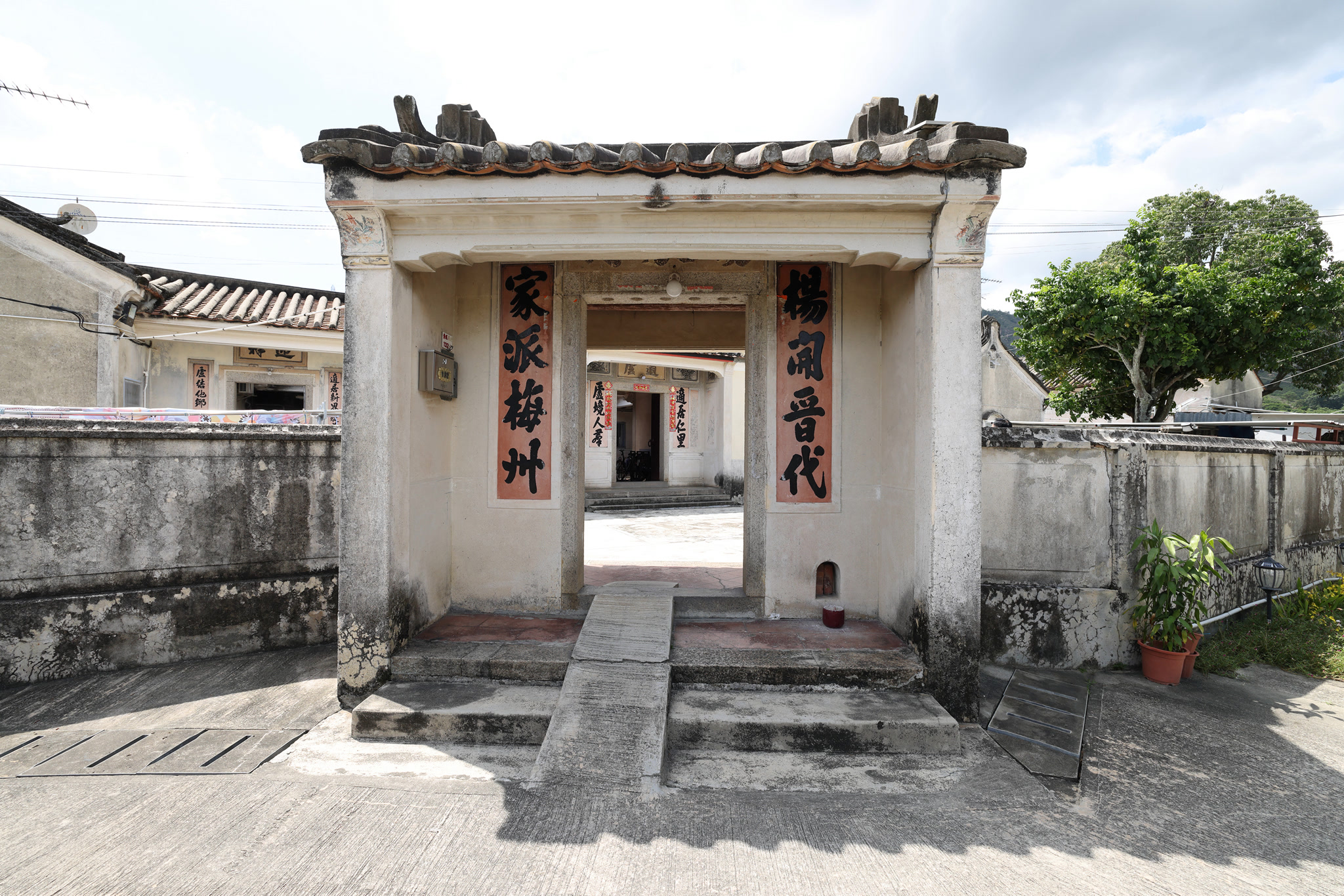
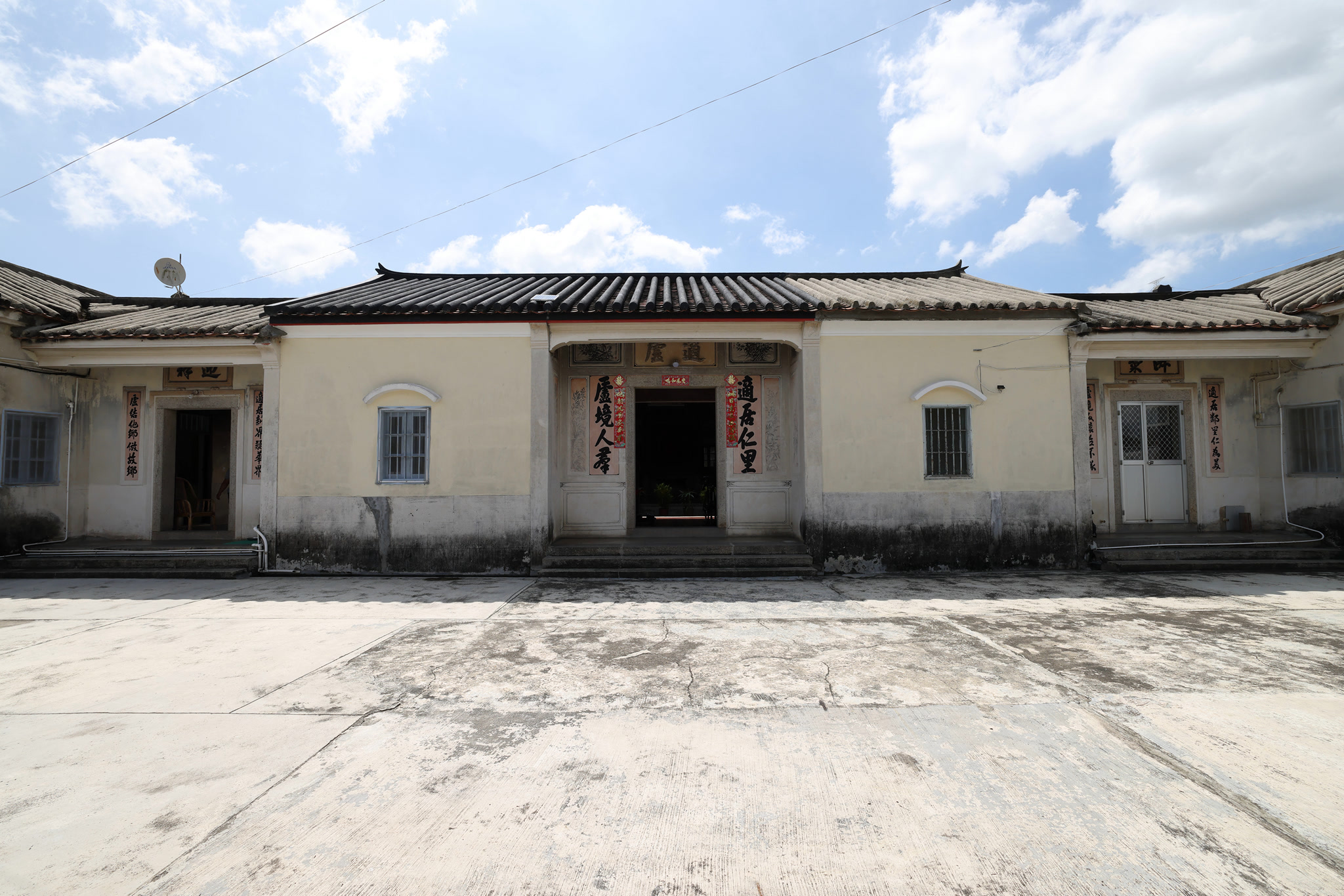
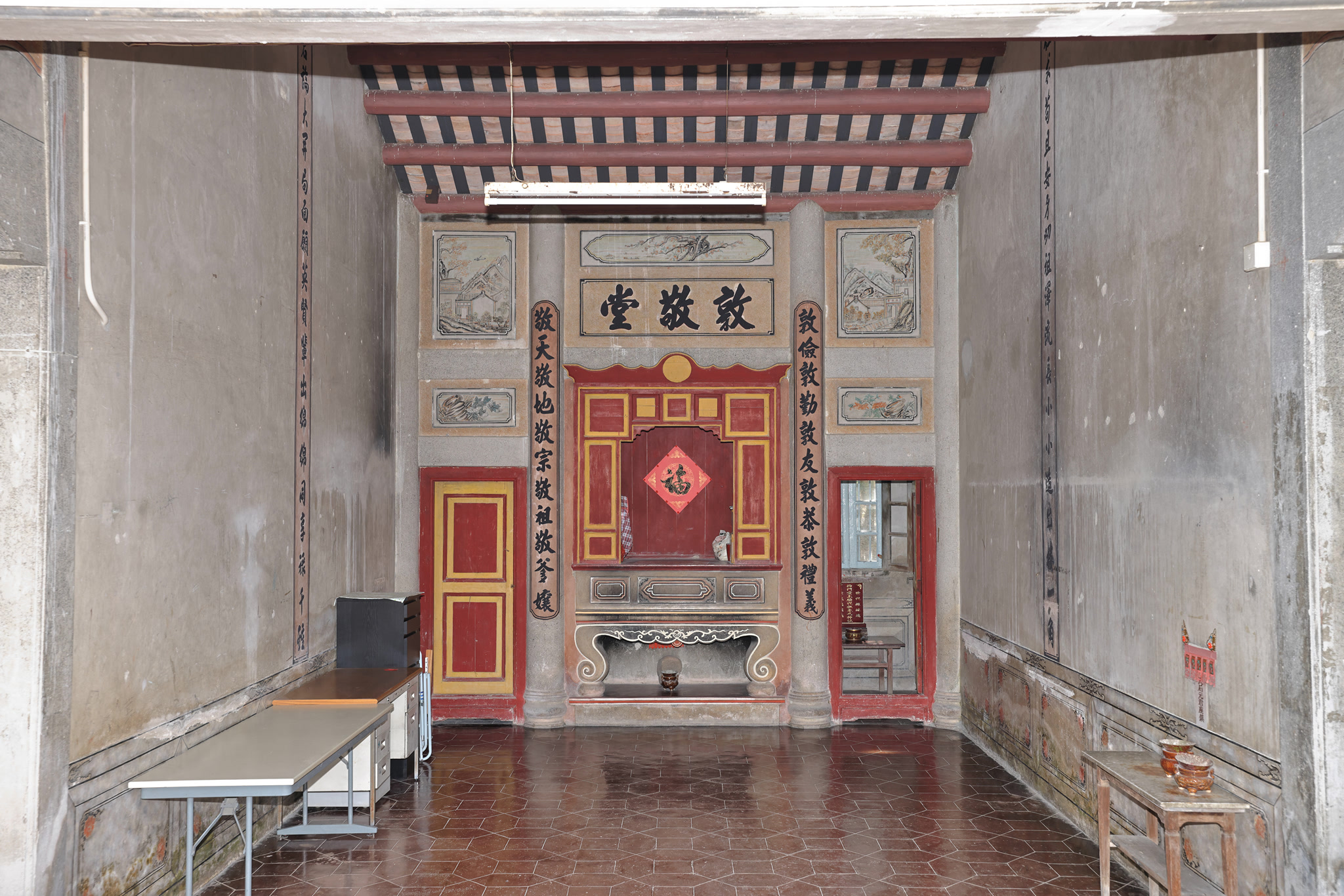
Sik Lo is located at Yeung Ka Tsuen, Shap Pat Heung, Yuen Long. It was built in 1933 using funds from two brothers, Yang Weinan and Yang Zhunan, who were overseas Chinese merchants. The Yang brothers were Hakka people originated from Meixian, Guangdong, who went to Indonesia to engage in trading business in the early years and then returned to Hong Kong, building houses and earning a living by farming. Sik Lo adopts the architectural style of a traditional Hakka weilong house (coiled dragon house), featuring a “two-hall-two-row” layout. An ancestral hall named Dun Jing Tang is located at the main hall, but the building complex does not have a semi-circular pool in its front as typical in similar Hakka residences.
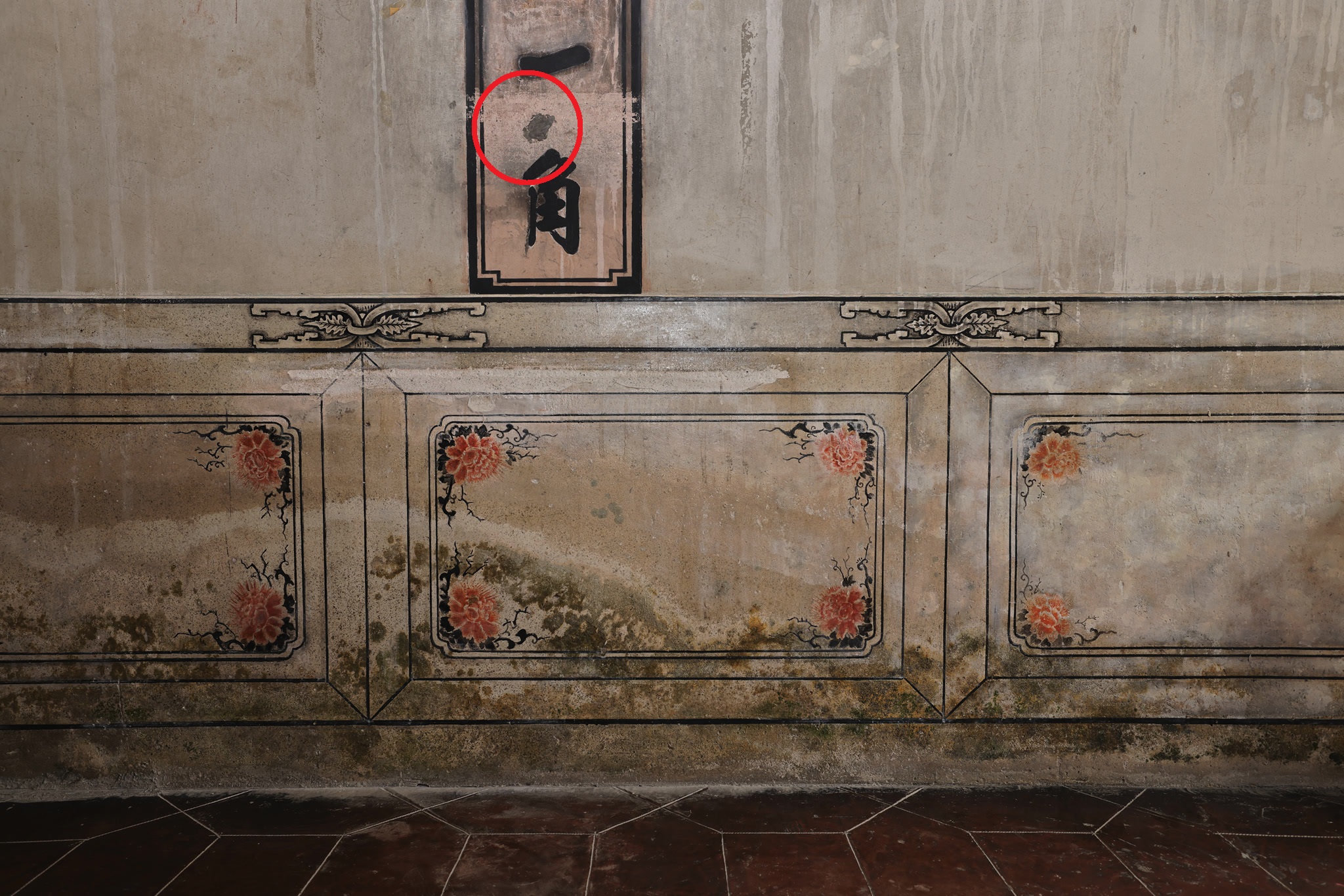
During the War of Resistance against Japanese Aggression, for a year, Yang Zhunan offered Sik Lo to the guerrilla force for their use, serving as a strategic post of the Yuen Long Armed Worker Unit led by the Hong Kong-Kowloon Brigade. Yang Zhunan’s nephew, Yang Yongguang, recalled that the guerrilla force members were disciplined and courteous during their temporary stay at Sik Lo. The members were assigned to different rooms in Sik Lo according to their ranks. However, as there were plenty of members, some had to sleep on the floor of the main hall. At that time, quite a lot of firearms were placed in the main hall. Once a gun accidentally discharged and left a bullet strike mark on the wall, and traces of its repair are still visible now.
As one of the bases in Yuen Long, Sik Lo also served as one of the important transit points for the Secret Rescue Operation at 1942. When the Japanese troops invaded Hong Kong, Zhou Enlai, the then Secretary of the Southern Bureau of the Communist Party of China Central Committee, gave instructions for the rescue of patriotic democrats and renowned cultural figures in Hong Kong. In response, Liao Chengzhi, Director of the Hong Kong Office of the Eighth Route Army, and certain others immediately coordinated with the Party organisations in Guangdong and the Guangdong People’s Anti-Japanese Guerrilla Force to organise the rescue of a large number of renowned cultural figures stranded in Hong Kong. People rescued included philosopher Hu Sheng, scientist Gao Shiqi, painter He Xiangning, poet Liu Yazi, writer Mao Dun, movie star Butterfly Wu and publisher Zou Taofen.
There were three main routes, eastern, western and sea, for the Secret Rescue Operation. The eastern route started from Hong Kong Island and crossed the harbour to East Kowloon and then went by land to Sai Kung; from there, those rescued were taken by boat from Kei Ling Ha to Shayuchong in Mirs Bay. The sea route involved sailing in fishing boats from Hong Kong Island to Cheung Chau as a transit station, and from there proceeded to Macao and then transferred the rescued people to areas around Taishan and Doumen. The western route, by which the largest number of people were rescued, mainly involved sailing by boat from Hong Kong Island to West Kowloon, then walking along Castle Peak Road to Tsuen Wan and crossing the high mountain of Tai Mo Shan before finally reaching the transit point of Sik Lo. Mao Dun, one of the well-known writers rescued, recorded in his work Tuo Xian Za Ji (Reminiscence about escaping the danger) details of how the rescue group spent a night at Sik Lo during their escape, then proceeded through Lok Ma Chau to Baishilong Village in Longhua, Shenzhen, where the Guangdong People’s Anti-Japanese Guerrilla Force was stationed. The entire rescue journey covered about fifty kilometres.
Sik Lo, which served as a transit point and liaison checkpoint for the guerrilla force at the time, witnessed the success of the Secret Rescue Operation. Unfortunately, when the hiding of guerrillas was exposed in 1942, the Japanese troops conducted a large-scale raid on Sik Lo. Although the guerrilla force had evacuated immediately on receiving warnings, the owner of Sik Lo, Yang Zhunan, was imprisoned for over a month by the Japanese. Despite brutal torture by the Japanese troops, Yang Zhunan never revealed any information about the guerrilla force. After his release, Yang Zhunan still warmly welcomed members of the Yuen Long Armed Worker Unit who came to visit him and offer their sympathies, indicating the unwavering support of the Yang family for the anti-Japanese guerrilla force and the family’s contribution to the resistance against Japanese Aggression.
Opening Hours:
This is private property and is not open to the public. When visiting the external area, please lower your voice and keep the place clean.
Address:
Nos. 131-132A Yeung Ka Tsuen, Shap Pat Heung, Yuen Long, New Territories